
In April 2021, I posed a question on this blog: Are women their own worst enemies? My question was fuelled by an incident in Sri Lanka, where a beauty pageant turned into a public display of jealousy and aggression among women. That, along with personal experiences, led me to consider whether women truly worked against each other. But looking back, I now realise that my perspective was shaped by a limited worldview—one that has since evolved.
Last summer, I stumbled upon a powerful community of women on TikTok, all deeply invested in advocacy and empowerment. Through conversations and live discussions, we formed the Sistas Standin Solidarity group, dedicated to uplifting women and challenging societal norms that seek to divide us. This group resonated with me deeply, aligning not only with my personal beliefs but also with the very purpose of this blog.
Through countless discussions, I began to see the real issue at hand: *Patriarchy, not women, has turned us against each other.* This realisation was my lightbulb moment! The belief that “women are their own worst enemies” is not an inherent truth but a carefully crafted tool used to maintain male dominance. It ensures that women remain divided, competing for validation under the male gaze instead of forming strong alliances.
The more I thought about it, the angrier I became. Women are not inherently pitted against each other—we’ve been taught to believe this lie. I’ve seen both men and women wield this narrative like a weapon, especially when things go wrong. But here’s what I’ve noticed: whenever someone says, “Women are their own worst enemies,” there’s often a man lurking in the background, dodging accountability
For far too long, we’ve been fed false narratives about women’s relationships. Phrases like “women don’t support each other,” “women are jealous of one another,” or “women will bring you down faster than a man” are not just untrue—they’re destructive. They create division, sow distrust, and keep us from realising our collective power. Why does patriarchy push these narratives? Because they work. They keep us from uniting, from standing together, from demanding the equality we deserve.
Think about it: women were excluded from countless spaces for centuries. It’s only through the relentless efforts of feminists that we’ve gained access to education, workplaces, and leadership roles. Yet, even as we break barriers, we’re told that women don’t support each other. As someone who’s spent years in the corporate world, I’ve seen this play out firsthand. A man’s assertiveness is praised as “strong leadership,” while a woman’s confidence is labeled “aggressive” or “bossy.” Women in leadership often find themselves isolated, their ideas questioned, their authority undermined. It’s exhausting, and it’s designed to keep us from rising.
And then there’s the way society pits women against each other. When a man cheats in a relationship, the blame often falls on the “other woman,” as if she alone is responsible. This narrative absolves men of accountability and turns women into scapegoats. A few years ago, a close friend of mine was in an exclusive relationship with a man who insisted on monogamy. Not long after, he took one of her friends to an event he had previously discussed with her. When my friend confronted him, he tried to shift the blame onto the other woman, claiming she had pressured him into it. My friend, a fierce feminist, saw through his lies. She refused to turn on her friend, recognising that both of them had been manipulated by his lack of integrity. Sadly, not all women see through this divide-and-conquer tactic, and it’s heartbreaking to watch.
If we’re honest with ourselves, we’ll see that it’s often the women in our lives who show up for us when it matters most. In my Ghanaian culture, it’s women who drop everything to support friends during times of grief, who organise baby showers, who stand by us on our wedding days, and who visit us when we’re unwell. They’re the ones who celebrate our victories and hold our hands through our struggles. So why do we believe the lie that we’re each other’s enemies? The truth is, women have always been there for each other. The one time I thought I had found a male friend who truly understood me, it turned out he saw me as nothing more than a potential conquest. It was a painful reminder of how patriarchy distorts relationships.
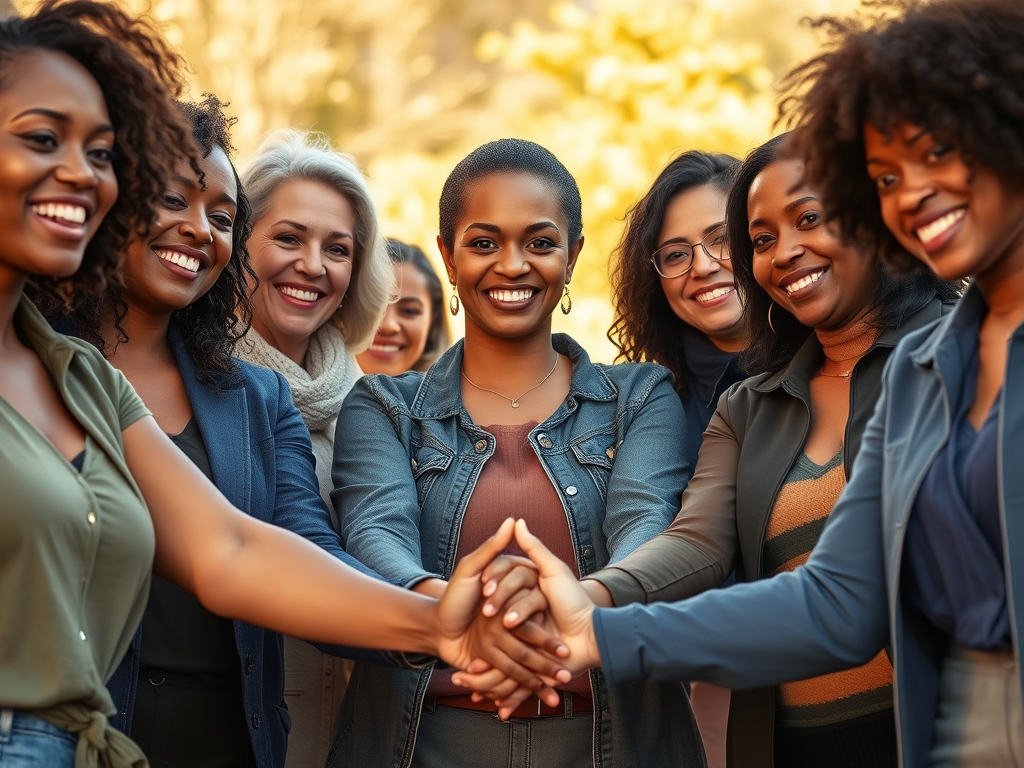
As women, we owe it to ourselves and to each other to dismantle these harmful narratives. We need to commit to supporting one another unapologetically. There is so much power in sisterhood and solidarity—it’s through this unity that we can bridge the gender gap and create a better world for all of us. It starts with us. If we stop seeing each other as competition and start seeing each other as allies, there’s no limit to what we can achieve. Look at how far we’ve come since the fight for equality began! Yes, there’s still work to be done, but the first step is to reject the idea that women are enemies. Healthy competition is fine, but when your sister wins, cheer her on. Because one day, you’ll need her to cheer for you.
1.Amplify Each Other’s Voices: Celebrate and uplift the women around you. Share their achievements, support their goals, and make sure their voices are heard.
2. Create Safe Spaces: Build communities—whether in person or online—where women can share their experiences, seek advice, and find mentorship without fear of judgment.
3. Challenge Stereotypes: Call out narratives that pit women against each other. Celebrate the diversity and strength of women everywhere.
4. Acknowledge Internalised Misogyny: Take a hard look at your own biases and behaviours. Unlearning these patterns is a journey, but it’s one worth taking.
5. Celebrate Success: Instead of feeling threatened by other women’s achievements, celebrate them. Compliment your colleagues, support your friends, and share their wins.
6. Build Supportive Networks: Create spaces where women can connect, collaborate, and support each other—whether through professional networks, book clubs, or online communities.
7. Mentor and Uplift: If you’re in a position to do so, mentor younger women or those earlier in their careers. Share your experiences, offer guidance, and help them navigate challenges. And if you’re being mentored, extend grace and gratitude—we’re all unlearning together.
The theme for International Women’s Day 2025 is Accelerate Action. I believe dismantling these harmful narratives about women is a crucial step toward bridging the gender gap. We are not each other’s enemies—we’ve been taught to see each other that way to keep us from claiming our power. You are my sister, and I am yours. Let’s stand in solidarity.
Thank you for taking the time to read, share, and comment. Let’s continue to effect change by sharing our experiences and supporting one another. Together, we can rewrite the narrative.
Discover more from Koya Nkrumah
Subscribe to get the latest posts sent to your email.

 Koya Nkrumah
One thought on “Sisters, Not Rivals: Why Women Must Stand Together”